
Welcome to the 67th edition of #theFutureReadyAdvisor Newsletter!
Subscribe & join the conversation. Share comments and feedback.
In business, as in math, sequence determines success.
A senior executive recently shared something with me that got me thinking. His company had just missed quarterly projections—not by a small margin, but significantly enough to rattle investor confidence. When I asked what happened, his response was telling: “We didn’t want to stress our employees or hold them accountable for meeting agreed targets. We thought being employee-first meant avoiding tough conversations.”
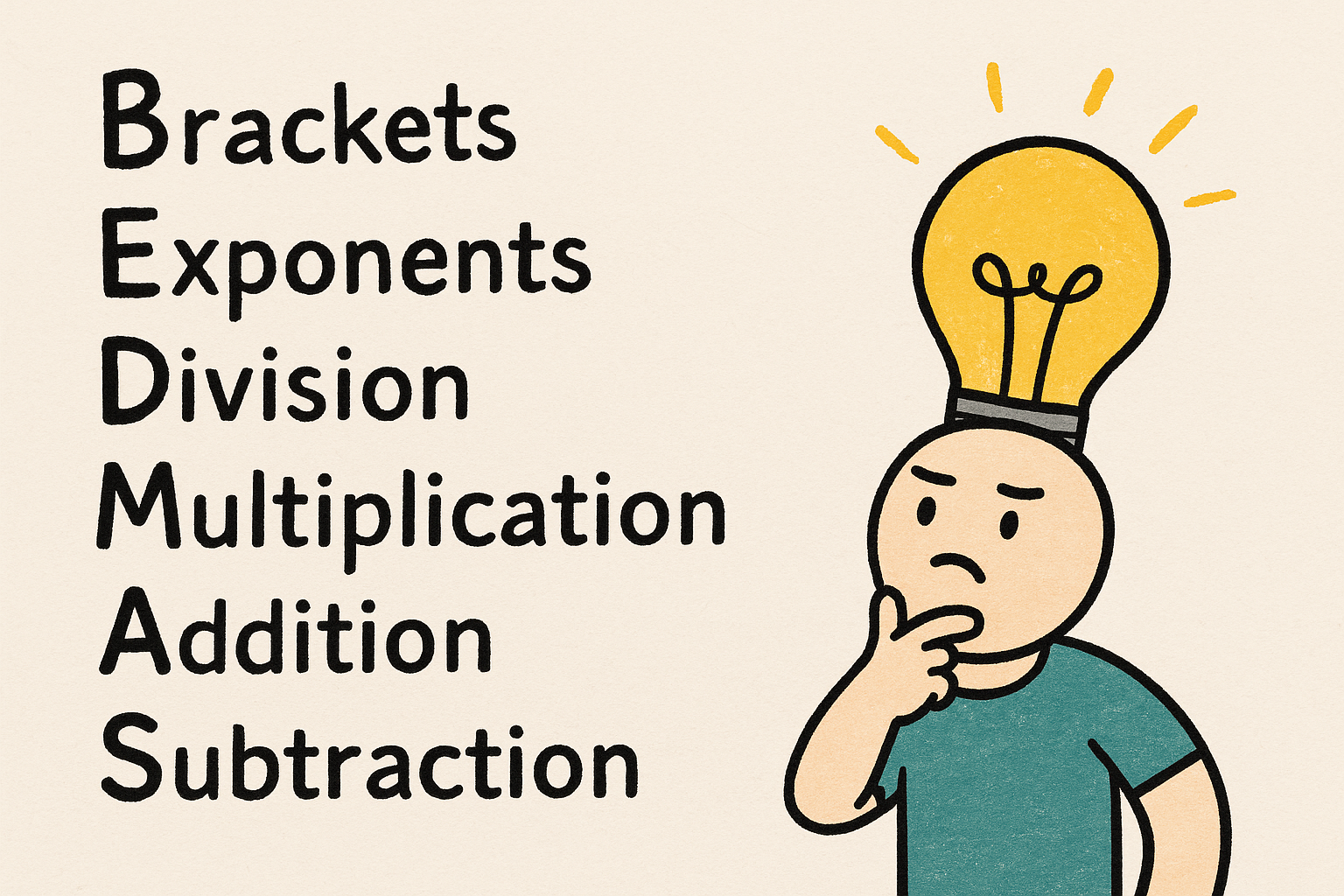
He paused, then added: “I realized we’d forgotten something basic. Remember BEDMAS from school? [note: BEDMAS is an acronym that helps remember the order of operations in mathematics. It stands for Brackets, Exponents, Division and Multiplication, Addition and Subtraction. This order is crucial for consistently and accurately evaluating mathematical expressions]. In other words—you can’t just do addition before multiplication and expect the right answer. Same in business. All our noble intentions about employee wellbeing became meaningless when we couldn’t keep the lights on.”
That conversation crystallized something I’ve been observing across industries: leaders and organizations are struggling with the fundamental sequence of business priorities. In our rush to embrace purpose-driven leadership and employee-centric cultures, which I agree is entirely the right thing to do, many have forgotten that sustainable impact also requires sustainable operations.
The Mathematics of Business Survival
BEDMAS isn’t just for middle school math; it’s a surprisingly effective lens for business decision-making.
We often think we can tackle everything at once in business. But just as mathematical expressions require a specific order of operations, some business priorities must come before others—because getting the sequence wrong can lead to subpar outcomes.
Here’s how the BEDMAS framework offers a strategic reminder of what comes first:
Brackets: Core Operations Your fundamental business model, revenue generation, and operational excellence come first; like brackets in an equation, they define the boundaries of everything else. Netflix understood this when they made their controversial 2011 decision to split DVD and streaming services. Critics called it corporate suicide, but Netflix knew their ‘brackets’ had to change before DVD became obsolete. They were willing to endure short-term customer losses to ensure long-term viability.
Exponents: Market Position Your competitive advantage and market differentiation multiply everything else. Companies that skip this step, trying to be everything to everyone, often find their other efforts diminished. WeWork’s spectacular 2019 collapse came partly from ignoring this principle: they pursued rapid expansion and purpose-driven messaging without establishing a defensible market position or sustainable unit economics.
Division/Multiplication: Resource Allocation How you deploy capital, talent, and time either multiplies your impact or divides your effectiveness. The tech sector’s 2020-2022 hiring spree provides a stark example of getting this wrong. Companies like Meta and Amazon hired aggressively to support growth initiatives and maintain employee satisfaction, but when economic conditions shifted, they were forced into massive layoffs, ultimately causing more employee stress than disciplined hiring would have.
Addition/Subtraction: Culture and Purpose Values, social responsibility, and employee programs add tremendous value, but only when the foundational elements are solid. Patagonia exemplifies this principle perfectly. Their environmental activism and employee-first policies are genuine and impactful, but they’re built on a foundation of exceptional products, clear market positioning, and disciplined operations.
Organizations that emphasize cultural initiatives before establishing rigorous operational discipline often run into trouble. Research from sources like Harvard Business Review’s The Hard Side of Change Management underscores that transformation efforts frequently fail, not because of cultural resistance alone, but due to a lack of operational rigor: things like clear project structure, leadership commitment, disciplined execution, and measurable milestones.
Harvard scholars point out that while investing in company culture is valuable, failing to lay a firm foundation of operational discipline can undermine even the best-intentioned cultural programs and jeopardize performance in the long run. The lesson: sustainable success depends not just on motivating people, but on embedding discipline and accountability into the fabric of change initiatives. Read, for example, Why Change Programs Don’t Produce Change and The Hard Truth About Soft Skills.
Of course, real business decisions aren’t as tidy as a math problem. Leaders often have to move on multiple fronts at once. But this metaphor serves as a useful reminder: some priorities are foundational. Without them, everything else becomes noise.
When Good Intentions Create Bad Outcomes
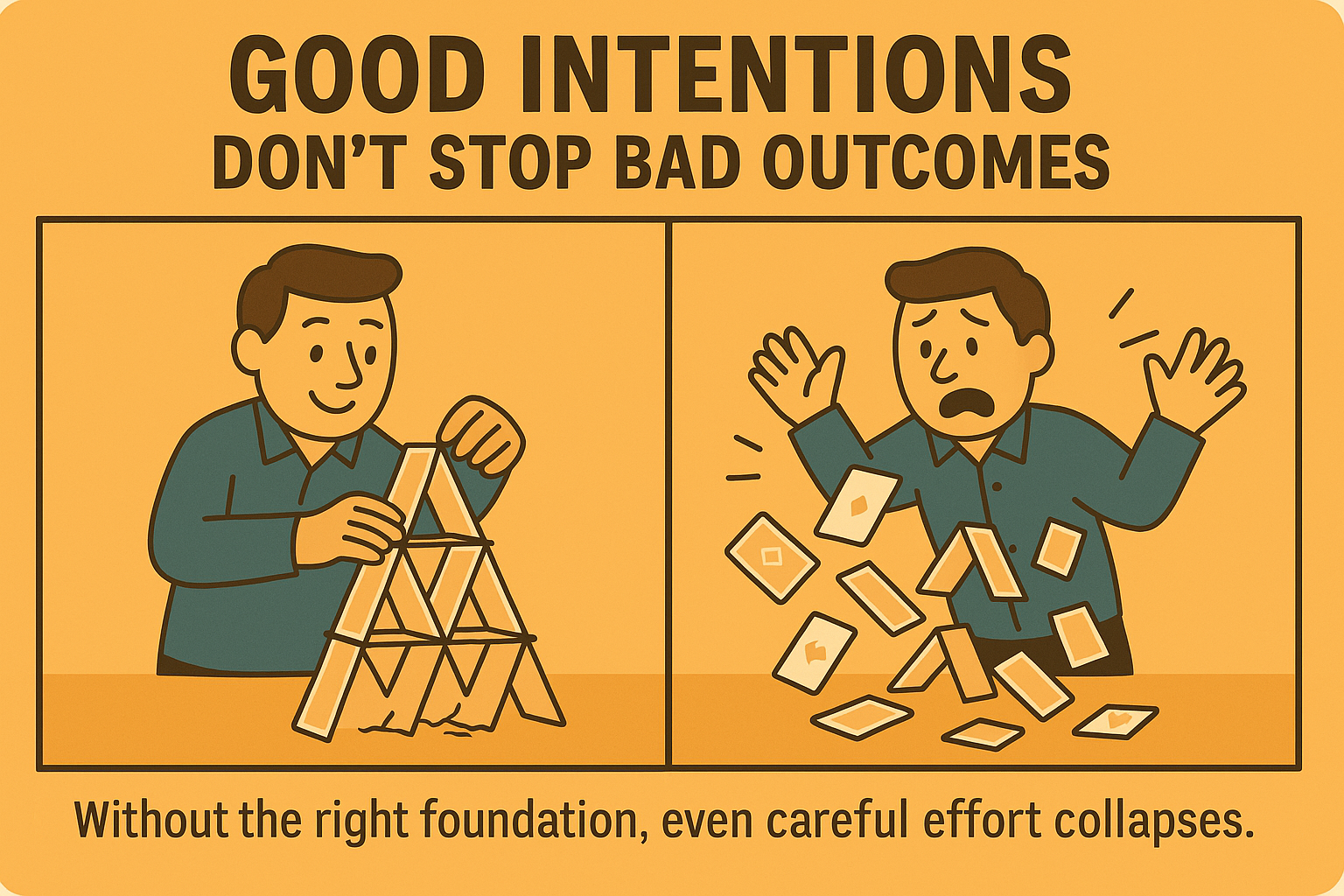
The executive’s story illustrates a pattern I’ve seen repeatedly: leaders who confuse the order of operations, thinking they can skip foundational steps to focus on more appealing “feel-good” initiatives.
For Advisory Practices: I’ve worked with financial advisors who’ve not had the necessary conversations with underperforming team members or unprofitable clients because they wanted to maintain a “supportive culture” or “avoid the tough conversations”. The result? Top performers become frustrated, margins compress, and eventually, everyone will suffer when the practice can’t invest in growth or technology upgrades.
For Corporate Leaders: Consider Airbnb’s early response to the COVID-19 crisis. In 2020, the company faced a collapse in global travel. Leadership initially tried to avoid layoffs, cutting spending elsewhere and maintaining a supportive culture. But as the crisis deepened, they were ultimately forced to lay off a quarter of their workforce. CEO Brian Chesky handled it with empathy, writing a remarkably transparent letter to employees. Even so, he later acknowledged that a clearer operational reset earlier on could have prevented deeper pain. Airbnb eventually recovered and went public, but the episode offered a harsh lesson in the cost of delaying hard decisions, even with the best of intentions.
Now contrast that with X (formerly Twitter) after Elon Musk’s acquisition. The company prioritized dramatic culture shifts and ideological alignment before stabilizing the business model, product roadmap, or revenue base. The result: advertiser flight, product missteps, and internal confusion—disruptions that might have been mitigated with a more sequenced approach to transformation.
Ironically, what feels like compassion—or bold vision—in the short term often creates far greater stress and instability in the long run.
Applying BEDMAS to Your Decision-Making
Whether you’re running an advisory practice or leading a corporate division, the BEDMAS principle provides a framework for sequencing difficult decisions:
Start with the Brackets – Core Operations Before launching any new initiative, ask: Are our fundamental operations sound? Do we have sustainable revenue streams? Are our core processes efficient and scalable? If the answer is no, that’s your first priority—everything else is secondary until this foundation is solid.
For advisors: This means ensuring your investment process, client service standards, and basic technology infrastructure work reliably before adding new service offerings or expanding your team.
For corporate leaders: This means validating your business model, understanding your unit economics, and ensuring operational efficiency before pursuing growth initiatives or cultural programs.
Secure Your Exponents – Market Position What makes you different and valuable in the marketplace? Can you articulate your competitive advantage clearly? If competitors can easily replicate what you offer, you’re building on unstable ground.
Optimize Division/Multiplication – Resource Allocation Every resource decision either multiplies your impact or divides your effectiveness. This is where the rubber meets the road on accountability. High-performing teams require clear expectations and honest feedback. Avoiding these conversations doesn’t protect your people; it protects your own discomfort at their expense.
Add Purpose and Culture Last – Addition/Subtraction Once your foundation is solid, cultural initiatives and purpose-driven programs become powerful multipliers. But they can’t substitute for operational excellence or market relevance.
If today’s leadership decisions feel more complex than they used to, it’s not just you—it’s the reality we’re all navigating. I created The Uncertainty Advantage to help leaders sequence their priorities when everything feels urgent.
📥 Get the free guide: The Uncertainty Advantage—a decision-making framework for leaders navigating change.
The Sustainable Path Forward
The executive I mentioned earlier learned this lesson the hard way, but he learned it well. His company implemented what they call “compassionate accountability”—clear expectations paired with genuine support. They restructured operations first, then rebuilt their culture on that stable foundation.
The results? Employee engagement scores improved once people understood their roles clearly and saw the company’s renewed stability. Revenue recovered within two quarters. Most importantly, they could sustain their employee programs because the business could sustain them.
This isn’t about choosing between profit and purpose; it’s about understanding that lasting purpose requires lasting organizations. You can’t serve your clients, employees, or community if you’re out of business.
The most successful leaders I work with have internalized this sequence. They’re not afraid of difficult conversations because they understand that avoiding them often leads to harder conversations later. They prioritize operational excellence not because they don’t care about culture, but because they know sustainable culture requires sustainable operations.
Like the mathematical expressions we learned to solve in school, business success follows an order of operations. Get the sequence right, and everything else becomes possible. Get it wrong, and even the best intentions won’t save you from the inevitable consequences.
Think about the sequence challenges you are facing in your practice or organization. Are you trying to solve addition before handling the brackets?
When you are ready, direct message me and I can help you with
- Speaking Engagements & Workshops designed for your team and clients
- Tailored, high-impact Consulting and Coaching Services for your practice
Check out my podcast and other resources at www.samsivarajan.com